
Happy Friday the 13th.
Today is Friday the 13th and I thought it is the perfect time for me to write this article.
Now, I know that you are probably looking aghast at the title of this blog “the Catholic origins of Friday the 13th?? Really, Paige? REALLY??”
Yes, really. Just hear me out for a second.
The date Friday the 13th has conjured up a sense of gloom, doom and dread, as many people consider it to be unlucky. Yet no one can pinpoint exactly why it is so “unlucky”.; they just KNOW that BAD THINGS happen on this date, right?
To be honest, it is a bit of a myth, an urban legend, that has gained so much momentum that people now consider it to be fact when nothing could be further from the truth.
Friday the 13th actually has Catholic origins and rather than being a day of bad luck, it is actually a holy day and therefore a day of good luck. But like with most things, evil likes to twist virtue and pervert stories and symbols of holiness, in order to either supplant them for their own or infuse them with so much fear and superstition that people get dissuaded from truth and virtue.
I mean, they did the same thing to Christmas (see HERE) and also to Halloween (see HERE) which is also another Catholic holy-day.
However, Friday the 13th has Catholic origins and it goes back to the Friday when Jesus died. However, I would not consider it an unlucky day – it is actually a very lucky day as that was the day God made the ultimate sacrifice for us all, to grant us a chance to enter Heaven. In my opinion, it isn’t just a lucky day, it should be celebrated with Mass, thanskgiving and gratitude.
But where does the number 13 come from?
It comes from the fact the Last Supper took place on the 13th of Nisan and it entailed 12 disciples plus Jesus, the 13th member. Jesus, Himself God Incarnate, who is vitue, holiness and luck itself – why would anyone consider that number to be unlucky, unholy or evil?
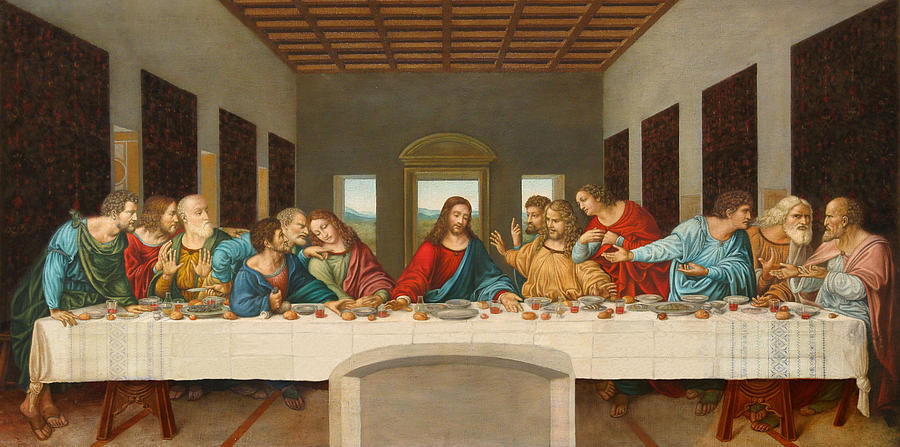
Additionally, 13 is a lucky number and is associated with the Blessed Virgin Mary as she was the 13th witness to the descent of the Holy Spirit.
The Virgin Mary, as our Lady of Fatima, who is patroness of TCF, didn’t just appear to the children multiple times on the 13th of the month, but 13th of July 1917 also falls on a Friday.
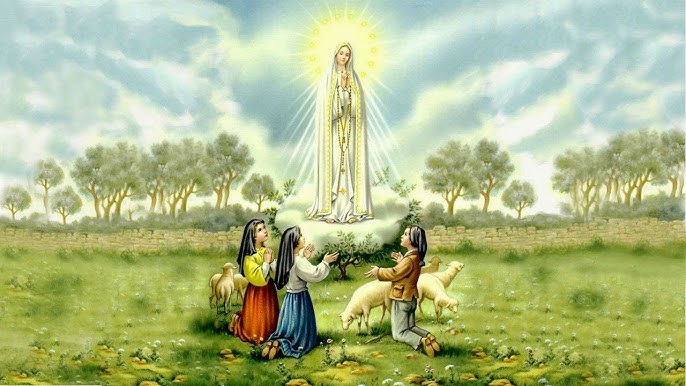
It’s almost like she was trying to convey a message about Friday the 13th, and reclaim it as a holy-day.
The trick that the enemy, the evil one, has played has been successfully perverting, twisting and rebranding what is holy and virtuous as something unlucky and evil. Evil likes to gaslight and project – never forget this.
Sure, there have been several occurences of misfortunes that have occured on Friday the 13th, but all of these happened AFTER Jesus came and sacrificed for us, which makes me suspect that the enemy, since the time of Jesus has been trying to malign Friday the 13th. Also, people’s expectations and fear of something evil or bad happening on a Friday the 13th tends to become a reality for them due to their own fears leading them to choices, decisions and mistakes that materialises their expectation of bad luck. And of course, evil people, like to capitalise on the collective fear of people around this date by commiting atrocities and crimes on this date, which further feeds the collective fear and dread of Friday the 13th.
In Italy, where my husband is from, Friday the 13th is actually considered a lucky day,
So do not fear Friday the 13th. Remember, God does not want us to be fearful and superstitious. He has not given us the spirit of fear, but of power, and of love and a sound mind (2 Timothy 1:7).
I do not consider Friday the 13th an unlucky day. I mean, I was born on a Friday. Fair enough, I was not on the 13th, but I still feel very honoured to be born on such a holy day of the week, as it is the day of the week that Jesus died for us.
Of course, you should exercise caution on Friday the 13th, especially if you have to leave the house and interact with others, because you know, there are nutjobs out there who want to use that date as an opportunity to cause chaos, mayhem and destruction.
Yes, be watchful and wise, but do not live in fear.
Connect with your guardian angel to watch over you and pray to St Michael the Archangel for protection, if you are particularly worried.
Spend that day in gratitude and thanksgiving and tap into the flipside of the superstition by reclaiming the holiness and luck associated with that date, through making special prayers to God and to our Lady for your most pressing intentions. You never know – your prayers may just be more efficacious on this date.
Our Lady, Seat of Wisdom, pray for us
MORE RESOURCES
ad Jesum per Mariam
🌹🙏🌹

 Traditional Catholic Femininity 🌹🙏🌹
Thank you, dear Sister Paige and entire team for this topic. May God bless you always in all that you do.
Get Outlook for iOS
LikeLike
thank you so much. i appreciate it. God bless you too
LikeLike
Lovely post.Traditionally, for Italians the number 13 is “good luck”; it is associated with St. Anthony of Padua, who died on the 13th of June. ~~~~~~~~~~~~~~~~~~~~~~~~~~~~~~~Because Black lives matter, I don’t vote Democrat.
LikeLike
That is interesting! Yes, I knew that Italians considered it lucky – my husband told me this many times – lol – but I didn’t know that bit about St Anthony of Padua. Thanks for sharing.
LikeLike